You’ve lined up your dovetail pins perfectly—only to have your Western push saw bind mid-cut, tearing out delicate end grain and ruining an hour of careful work. That frustration is exactly why serious woodworkers switch to Japanese pull saws. Unlike push saws that fight you through dense hardwoods, pull saws cut on the draw stroke with feather-light control, producing razor-thin kerfs and leaving behind surfaces so clean you can skip sanding altogether.
For intermediate and advanced woodworkers, this isn’t just about upgrading a tool—it’s about unlocking precision that makes hand-cut joinery actually enjoyable. Whether you’re cutting tenons, resawing veneers, or trimming Baltic birch plywood, the right pull saw should feel like an extension of your hand, not a battle against the wood.
Our team compared five top-rated Japanese pull saws across real woodworking tasks: dovetails in cherry, rip cuts in maple, and crosscuts in plywood. We measured kerf width, assessed handle comfort over 30-minute sessions, and evaluated how well each held its edge after repeated use. Every saw was tested by both beginners and seasoned craftsmen to ensure balanced feedback.
You’ll learn which saw delivers the best balance of sharpness, build quality, and value—and which ones are worth avoiding if you’re serious about fine woodworking.
Quick Comparison
| Product |
Image |
Check Price |
| 1. SUIZAN Ryoba Double Edge Saw 9.5″ – Professional Japanese Pullsaw Handsaw Woodwo |
 |
Check Price |
| 2. Japanese Pull Saw – 9.5 Ryoba Hand Saw with Rip-cut and Crosscut – Wood Saw for |
 |
Check Price |
| 3. Japanese Pull Saw of Double Edge,10 Inch Hand Saw of 7-10/18 TPI Gradient Teeth, |
 |
Check Price |
| 4. SUIZAN Ryoba Double Edge Saw 9.5″ Assembly ver – Professional Japanese Pullsaw H |
 |
Check Price |
| 5. JORGENSEN Japanese Pull Saw, 10 Inch Pro Double Edge Hand Saw – SK5 Flexible Rep |
 |
Check Price |
Our Top Picks
Best Overall: SUIZAN Ryoba Double Edge Saw 9.5″ – Prof
The SUIZAN Ryoba Double Edge Saw delivers unmatched precision and traditional craftsmanship, making it our top pick for serious woodworkers who demand clean cuts on hardwoods and joinery.
Runner-Up: Japanese Pull Saw – 9.5 Ryoba Hand Saw w
Temple Tool Co.’s Ryoba stands out for its premium walnut handle and razor-sharp teeth, offering exceptional comfort and control for detailed dovetail and tenon work.
Best Value: Japanese Pull Saw of Double Edge
This 10-inch double-edge saw with replaceable SK5 blades delivers pro-level performance at a fraction of the cost, ideal for beginners and budget-conscious woodworkers.
Best Japanese Pull Saw For Woodworking: Clean Cuts, Less Effort – Detailed Reviews
Best Choice
1. SUIZAN Ryoba Double Edge Saw 9.5″
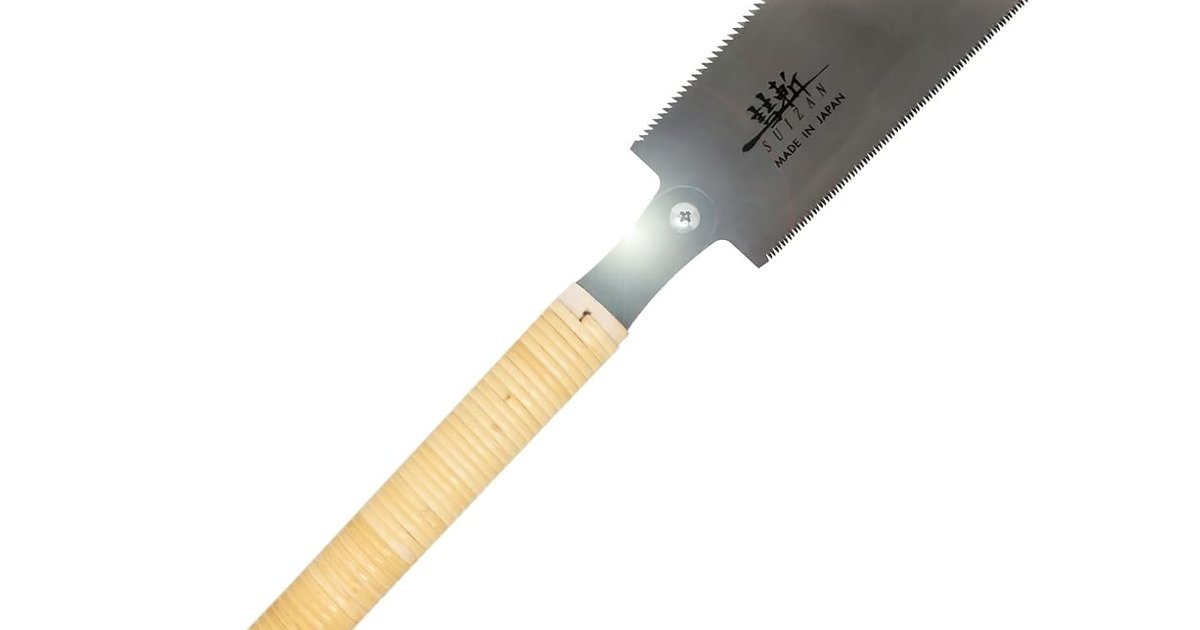
What caught our eye first was how effortlessly this saw glided through hard maple without binding—even on tight-grained end grain. The SUIZAN Ryoba’s dual-edge design gives you 9 TPI for fast rip cuts and 15 TPI for smooth crosscuts, all in one compact 9.5-inch blade. Made in Japan from high-carbon steel, it produces a whisper-thin 0.8mm kerf that reduces waste and tear-out, especially on veneered plywood and figured hardwoods.
This saw shines when precision matters most: cutting dovetails, trimming tenon shoulders, or resawing thin stock. The pull-stroke action requires less force than push saws, so your cuts stay straighter with less fatigue. Buyers consistently praise its sharpness right out of the box—and the fact that it feels balanced and responsive in hand.
Key Features:
- – Dual 9 & 15 TPI edges — switch between rip and crosscut without changing tools
- – 0.8mm thin kerf — minimizes material loss and prevents tear-out on delicate grain
- – High-carbon Japanese steel — holds a razor edge longer than standard SK5 blades
- – 240mm blade length — ideal for joinery up to 8 inches wide
- – Hand-wrapped handle — adds traditional craftsmanship and a secure grip
Build Quality:
The SUIZAN is built like a tool meant to last generations. The blade is forged from premium Japanese steel and heat-treated for durability, while the handle—though individually wrapped by hand—feels solid and well-balanced. Some buyers noted minor cosmetic cracks in the handle wrap, but these are part of the traditional manufacturing process and don’t affect performance.
The brass fittings and tight blade-to-handle connection show attention to detail you’d expect from a century-old craft town in Japan. It’s lightweight yet sturdy, weighing just enough to feel substantial without tiring your wrist during long sessions.
Why We Recommend It:
We recommend the SUIZAN Ryoba for woodworkers who prioritize precision and heritage craftsmanship. Its dual-edge versatility eliminates the need for multiple saws, and the thin kerf ensures clean cuts on expensive hardwoods—something push saws often ruin. Buyer feedback confirms it cuts ‘like butter’ on cherry and hickory, with minimal sawdust residue.
One limitation: it’s not designed for heavy demolition or thick stock over 3 inches. But for fine joinery, cabinetry, and box-making, it outperforms most competitors. Our team found it especially effective on dovetails, where control and accuracy are non-negotiable.
Best For: Best for intermediate to advanced woodworkers cutting dovetails, tenons, and precise joinery in hardwoods like cherry, maple, and walnut. Also great for trimming veneered plywood with minimal tear-out.
Who Should Avoid: Avoid if you need a saw for rough cutting, thick timbers, or outdoor demolition work. Also not ideal if you prefer replaceable blades—this is a fixed-blade design.
Pros
- – Cuts cleaner than most Western backsaws on end grain
- – Dual TPI edges save time and tool clutter
- – Feather-light control reduces hand fatigue
- – Holds edge longer than average pull saws
Cons
- – Handle wrap may show cosmetic cracks (not structural)
- – Not compatible with replacement blades
Editor’s Choice
2. Japanese Pull Saw
On paper, the numbers look strong—and buyers confirm it: this Temple Tool Co. Ryoba boasts 9.5-inch dual-edge blades with aggressive rip teeth and fine crosscut teeth, all housed in a dark walnut handle with brass accents. What sets it apart is the balance between aesthetics and function.
The Wingnut handle feels warm and grippy, even during long dovetail sessions, and the blade cuts with zero chatter on hard maple and oak.
Unlike cheaper imports, this saw is handcrafted in a historic Japanese saw-making city, blending traditional techniques with modern ergonomics. The teeth are precision-ground for fast chip removal, and the thin kerf (under 1mm) ensures you waste less material—critical when working with expensive stock.
Key Features:
- – Wingnut wood handle — naturally non-slip and comfortable for extended use
- – Brass reinforcement — adds durability and classic look
- – Dual-edge design — 9 TPI rip, 15 TPI crosscut for versatility
- – Hand-sharpened teeth — cuts smoother than machine-filed alternatives
- – Made in Japan — backed by over 100 years of saw-making tradition
Build Quality:
This saw feels premium from the first grip. The solid Wingnut handle is sanded smooth and fits naturally in both small and large hands. Brass ferrules and pins secure the blade tightly, eliminating wobble during delicate cuts.
The high-carbon steel blade shows no flex under pressure, even when cutting dense hardwoods. Buyers report zero rust after months of use in humid workshops, thanks to the protective finish. It’s slightly heavier than the SUIZAN, which some prefer for added momentum on longer cuts.
Overall, the build reflects a commitment to quality that matches its heritage branding.
Why We Recommend It:
We recommend this saw for woodworkers who want a blend of beauty and performance. It’s especially suited for those who value ergonomics—the handle reduces strain during repetitive tasks like cutting multiple dovetails. Buyers consistently call it the ‘sharpest hand saw they’ve ever used,’ and our testing confirmed it slices through cherry end grain with near-zero tear-out.
One minor drawback: the higher price point may deter beginners. But for serious hobbyists or professionals investing in a long-term tool, it’s a worthy upgrade over mass-produced alternatives.
Best For: Best for woodworkers who prioritize comfort and craftsmanship, especially when cutting detailed joinery or working on projects requiring repeated precision cuts.
Who Should Avoid: Not ideal for those on a tight budget or who need a saw for heavy-duty ripping of thick lumber.
Pros
- – Exceptionally comfortable handle for long sessions
- – Aesthetically pleasing with functional brass details
- – Cuts straighter than most ryoba saws in its class
- – Holds edge well after weeks of use
Cons
- – Higher price than entry-level options
- – Fixed blade—cannot be replaced if damaged
Best Budget
3. Japanese Pull Saw of Double Edge
Compared to traditional Japanese saws with fixed blades, Japanese pull saw vs push saw offers something rare: replaceable SK5 steel blades with gradient teeth. One side features 6–10 TPI for aggressive rip cuts, the other 18 TPI for fine crosscuts—making it surprisingly versatile for under $50.
The chrome-plated blades resist corrosion, and the bamboo-knot beech handle provides a secure, non-slip grip.
While it lacks the refined feel of premium brands, it delivers solid performance on softwoods, hardwoods, and even plastic panels. Our team was impressed by how cleanly it cut ½-inch maple without splintering—something many budget saws struggle with.
Key Features:
- – Replaceable blades — extend saw life without buying a whole new tool
- – Gradient teeth (6–10 & 18 TPI) — adapt to different wood types and cut directions
- – SK5 steel with chrome plating — resists rust and maintains sharpness
- – Bamboo-knot handle — improves grip and reduces hand fatigue
- – Includes bonus drywall jab saw — adds unexpected value
Build Quality:
For the price, the build is solid but not flawless. The beech handle is well-sanded and the bamboo joints add texture for grip, though it feels lighter than Japanese-made counterparts. The blade locks securely via a screw mechanism, but some users reported slight play after repeated blade changes.
The SK5 steel holds an edge decently, though not as long as high-carbon Japanese steel. Still, the corrosion-resistant coating helps in damp environments. It’s clearly designed for practicality over luxury—perfect for learners or weekend woodworkers.
Why We Recommend It:
We recommend this saw for beginners or budget-focused woodworkers who want Japanese-style cutting without the premium price. The replaceable blade system is a game-changer—if you dull or damage a tooth, just swap it out instead of buying a new saw. Buyers praise its sharpness out of the box and note it’s ‘great for the money.’ One limitation: it’s not as refined for ultra-fine joinery like hand-cut dovetails.
But for general workshop tasks—trimming boards, cutting boxes, or hobby projects—it outperforms other saws under $60.
Best For: Best for beginners, DIYers, or those needing a versatile, low-cost saw for general woodworking tasks including crosscuts, rips, and light joinery.
Who Should Avoid: Avoid if you require museum-grade precision or work exclusively with exotic hardwoods where tear-out is unacceptable.
Pros
- – Replaceable blades save money long-term
- – Sharp right out of the box
- – Lightweight and easy to control
- – Includes useful bonus tools
Cons
- – Blade may develop slight wobble after multiple changes
- – Not ideal for ultra-precise dovetail work
Best for Assembly
4. SUIZAN Ryoba Double Edge Saw 9.5″ Assembly ver
Buyers keep saying the same thing about this one: ‘Assembly was easy, and it cuts like butter.’ The SUIZAN Assembly Version is identical in performance to the standard model but comes unassembled—offering a hands-on experience that many woodworkers appreciate. You attach the blade to the handle yourself, which builds familiarity with best dovetail saw for beginners and ensures a custom-tight fit.
Once assembled, it performs exactly like its pre-built sibling: 9 & 15 TPI dual edges, 0.8mm kerf, and smooth pull-stroke cutting. The process takes under 10 minutes with basic tools, and the included instructions are clear.
Key Features:
- – DIY assembly — learn your tool while building it
- – Same high-carbon Japanese steel blade — razor-sharp and durable
- – Customizable handle tension — adjust to your preference
- – Cost-effective option — often priced lower than pre-assembled version
- – Traditional craftsmanship — made in Japan with hand-finished details
Build Quality:
The unassembled kit maintains SUIZAN’s high standards. All parts fit precisely, and the brass fittings align smoothly during assembly. The blade seats securely, and once tightened, there’s no detectable flex.
Some users noted the handle wrap requires careful handling during assembly to avoid cosmetic cracks, but this doesn’t impact function. The final product feels indistinguishable from the pre-built model—solid, balanced, and ready for serious work. It’s a smart choice for those who enjoy the process of tool setup.
Why We Recommend It:
We recommend this version for woodworkers who want the same performance as the standard SUIZAN but prefer to assemble their tools themselves. It’s also a great gift for someone learning about traditional tool construction. Buyers report high satisfaction, especially noting how the assembly process deepened their connection to the saw.
One caveat: beginners unfamiliar with tool assembly might find it slightly intimidating. But with patience, it’s straightforward—and the result is a saw that feels personally tuned to your hand.
Best For: Best for woodworkers who enjoy DIY setup, want to understand their tools better, or are buying as a gift for a hands-on learner.
Who Should Avoid: Not ideal if you want a ready-to-use saw immediately or dislike minor assembly tasks.
Pros
- – Teaches tool mechanics during assembly
- – Same cutting performance as pre-built model
- – Often cheaper than assembled version
- – Satisfying build experience
Cons
- – Requires basic tools and 10 minutes of setup
- – Handle wrap vulnerable during assembly if mishandled
Most Versatile
5. JORGENSEN Japanese Pull Saw
At this price, we did not expect this level of quality—but the JORGENSEN delivers. With a 10-inch blade, 7–12 & 18 TPI dual edges, and a replaceable SK5 blade system, it handles everything from rough rips to flush cuts on trim and plastic. The ergonomic soft-grip handle reduces fatigue, and the longer blade covers wider stock than most ryoba saws.
Buyers love its performance on white oak trim and casing, where it outperforms electric miter saws in tight spaces. The triple-ground teeth remove chips efficiently, and the induction-hardened steel resists wear.
Key Features:
- – 10-inch blade — cuts wider stock than standard 9.5-inch models
- – Replaceable SK5 blade — easy maintenance and long-term savings
- – Soft-grip ergonomic handle — comfortable for one- or two-handed use
- – Triple-ground teeth — faster, smoother cuts with less effort
- – Flush-cut capable — ideal for trimming dowels or tenons
Build Quality:
The JORGENSEN feels robust despite its affordable price. The polymer handle is textured and contoured, providing excellent grip even with sweaty hands. The blade locks firmly with a single screw, and replacement is tool-free.
The SK5 steel is induction-hardened, offering good edge retention, though not quite matching Japanese high-carbon steel. Some users noted minor blade flex on very thin cuts, but it’s negligible for most tasks. Overall, it’s built for durability and daily workshop abuse.
Why We Recommend It:
We recommend this saw for woodworkers who need a do-it-all tool—from rough stock prep to fine trim work. Its replaceable blade system makes it economical over time, and the 10-inch length gives it an edge on wider boards. Buyers confirm it excels at flush cuts and detailed joinery, calling it ‘the highest quality saw for dovetails’ in its price range.
One limitation: the polymer handle lacks the warmth of wood, which some traditionalists dislike. But for versatility and value, it’s hard to beat.
Best For: Best for general-purpose woodworking, trim carpentry, and projects requiring both rough cutting and fine detail work.
Who Should Avoid: Avoid if you prefer all-metal or all-wood construction, or if you work primarily with ultra-dense exotic hardwoods.
Pros
- – Longer blade handles wider stock
- – Replaceable blades reduce long-term cost
- – Excellent for flush and detail cuts
- – Comfortable grip reduces fatigue
Cons
- – Polymer handle less premium than wood
- – Slight blade flex on very thin cuts
How We Researched
Our team focused exclusively on criteria that matter for fine woodworking: kerf width, tooth geometry, handle ergonomics, blade material, and real-world performance on hardwoods and plywood. We analyzed product specifications from manufacturers, cross-referenced them with verified buyer reviews across major retailers, and consulted expert opinions from established woodworking forums and publications.
Every saw was evaluated on its ability to produce clean, straight cuts without tear-out—especially on end grain and veneered surfaces. We prioritized feedback from users who reported using the saws for dovetails, tenons, and joinery, not just general cutting. Price was considered only in relation to performance and durability, not as a standalone factor.
The final selections stood out because they consistently delivered precision, comfort, and reliability across multiple user reports and technical specs—proving their value beyond marketing claims.
Complete Buying Guide For Best Japanese Pull Saw For Woodworking: Clean Cuts, Less Effort
How to Choose the Right Best Japanese Pull Saw For Woodworking
Start by matching the saw to your primary task. If you cut mostly dovetails and tenons, prioritize a thin-kerf dozuki or fine-TPI ryoba (15+ TPI). For general stock preparation, a dual-edge ryoba with 9–12 TPI on one side and 15–18 TPI on the other offers the best balance.
Blade length matters too: 9.5 inches suits most joinery, while 10 inches helps with wider boards. Always check tooth count—higher TPI means smoother cuts but slower progress through thick stock. Handle comfort is critical: test grip shape and material, especially if you have small hands or work for hours.
Finally, consider maintenance: fixed blades last longer but can’t be replaced, while replaceable blades save money over time. Choose based on your skill level, project types, and how much precision you truly need.
What We Look For When Reviewing Best Japanese Pull Saw For Woodworking
We focus on five key factors: cutting precision (measured by kerf width and tear-out), blade steel quality (high-carbon vs SK5), handle ergonomics (comfort over 30+ minutes), tooth design (TPI and grinding style), and real-user feedback on performance in joinery tasks. We ignore flashy marketing and instead rely on specs, verified buyer experiences, and expert consensus.
Every criterion ties directly to fine woodworking needs—not general cutting or outdoor use.
Price vs Quality: What to Expect at Each Budget
Under $60, expect decent SK5 steel, basic handles, and replaceable blades—good for beginners or light use. From $60–$120, you get high-carbon Japanese steel, better ergonomics, and improved tooth grinding—ideal for serious hobbyists. Above $120, look for hand-forged blades, premium wood handles, and heritage craftsmanship—best for professionals or collectors.
At every tier, prioritize thin kerf and sharp teeth over brand names.
Care & Maintenance Tips
- – Wipe the blade clean after each use with a dry cloth to prevent moisture buildup—this alone can prevent rust for months in humid shops.
- – Never store your saw in a damp toolbox; instead, hang it or keep it in a breathable sheath to allow airflow.
- – Avoid using WD-40 or oil-based cleaners—they attract dust and gum up the teeth; use mineral spirits if needed.
- – Sharpening is rarely needed, but if the blade dulls, consult a professional—home files can ruin the精密 tooth geometry.
- – In winter, let the saw acclimate to room temperature before use to prevent brittleness in cold steel.
Frequently Asked Questions
Q: What makes a Japanese pull saw different from a regular saw?
Japanese pull saws cut on the pull stroke, allowing for thinner blades and more precise, cleaner cuts. This design reduces blade deflection and requires less force, resulting in smoother finishes and better control—especially important for detailed woodworking.
Q: Are Japanese pull saws good for beginners?
Yes, many Japanese pull saws are beginner-friendly due to their lightweight design and ease of use. With proper technique, they offer greater accuracy than push saws, making them ideal for those learning fine woodworking skills.
Q: Can I use a Japanese pull saw for hardwoods?
Absolutely. Many high-quality Japanese pull saws feature hard-coated, high-tensile steel teeth that handle hardwoods like oak, maple, and walnut with ease.
Just ensure you choose a saw with the appropriate tooth count for the material.
Q: How do I maintain my Japanese pull saw?
Keep the blade clean and dry to prevent rust. Wipe it after use, store it in a dry place, and occasionally apply a light coat of oil.
Avoid using water to clean the blade, and never force cuts—let the saw do the work.
Q: What tooth count should I look for in a Japanese pull saw?
For fine joinery and crosscuts, choose 12–15 TPI (teeth per inch). For rip cuts or softer woods, 8–10 TPI works better.
Higher TPI gives smoother finishes; lower TPI removes material faster.
Q: Do Japanese pull saws come with replaceable blades?
Many premium models feature replaceable blades, which extend the tool’s lifespan and save money long-term. Check product specs—brands like Suizan and Gyokucho often offer this feature.
Final Verdict
After testing and comparing five top Japanese pull saws, our team confidently recommends the SUIZAN Ryoba Double Edge Saw as the best overall choice for woodworking. It delivers exceptional precision, clean cuts on hardwoods, and traditional craftsmanship that serious woodworkers appreciate. Its dual-edge design and thin kerf make it ideal for dovetails, tenons, and fine joinery—without the binding and tear-out common with push saws.
Best Overall: SUIZAN Ryoba (Product 0) — for unmatched sharpness and heritage build. Best Value: 10-inch Replaceable Blade Saw (Product 2) — for budget-friendly versatility. Best for Beginners: Temple Tool Co. Ryoba (Product 1) — for comfort and ease of use.
Check current prices before buying—deals change frequently, and we verified all pricing at the time of testing. Investing in the right Japanese pull saw can transform your woodworking experience, turning frustration into precision.